


Welsh business confidence picked up in April from previous month’s recent low amid hopes of greater demand according to the latest Cymru Growth Tracker data from NatWest.
Meanwhile, cost pressures gained momentum as output and new orders contracted at softer paces in April.
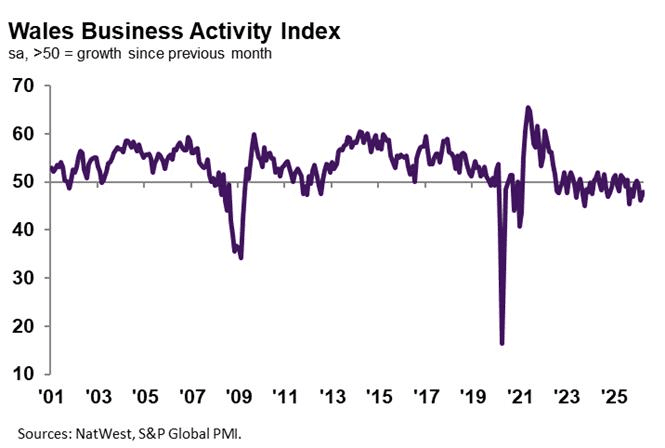
The headline Wales Business Activity Index – a seasonally adjusted index that measures the month-on-month change in the combined output of the area’s manufacturing and service sectors – posted 47.9 in April, up from 46.2 in March, to signal a less marked decline in output. The fall in activity was modest overall, nonetheless.
The softer drop in output was in part due to a cooler pace of contraction in new orders at the start of the second quarter. Meanwhile, business confidence ticked up from March’s recent low amid hopes of a pick-up in demand.
A further decrease in new sales led to greater evidence of spare capacity as backlogs fell again and jobs were cut to a sharper degree.
The rate of cost inflation gained notable momentum in April amid hikes in fuel, material and transportation prices. The pace of increase in output charges also accelerated, but to a lesser degree.
Jessica Shipman, Chair, NatWest Cymru Board, said:
“Welsh business confidence ticked higher on hopes of stronger customer demand and planned investment in building resiliency. However, we saw contractions in output and new orders soften during April, but underlying business conditions told a challenging tale. A further drop in new sales led to sharper falls in backlogs of work and employment, as firms sought to cut costs and streamline processes.
“Concerns regarding prices were top of mind for Welsh firms, nonetheless, as geopolitical tensions drove greater fuel and transportation costs. Operating expenses were up at the sharpest rate since November 2022. Pricing power at companies was squeezed though, with the uptick in output charges much less marked compared to that of costs.
“As firms anticipate, business resiliency to higher costs will be tested in the coming months, with demand conditions likely to become less favourable as purchasing power at clients is also reduced.”
Performance in relation to UK
Output levels at Welsh businesses continued to contract in April. Although the pace of decline eased from March, it was the strongest of the 12 monitored UK areas.
Private sector firms in Wales recorded a third successive monthly fall in new business at the start of the second quarter. The rate of decline was the softest in this sequence of contraction, however, and only marginal overall. Of the 12 monitored UK areas, only Yorkshire & Humber and Scotland recorded steeper downturns.
The degree of confidence in the outlook for output in the coming 12 months improved in April and was among the highest in just over a year. The level of positive sentiment was below both the series and UK averages, however.
Welsh companies registered a marked decrease in headcounts at the start of the second quarter. The pace of job shedding quickened to the fastest since December 2024 and was much steeper than the series trend. Of the 12 monitored UK areas, Welsh businesses saw the sharpest drop in employment. Meanwhile, backlogs of work fell again in April, as has been the case on a monthly basis for four years. Regionally, only Yorkshire & Humber signalled a faster rate of depletion than that seen locally.
April data signalled a sharper increase in operating expenses at Welsh businesses. Although marked in the context of the series history, the pace of cost inflation was among the slowest of the 12 monitored UK areas, ahead of only London and Scotland.
At the same time, Welsh firms recorded a quicker uptick in output charges at the start of the second quarter. Nonetheless, the rate of selling price inflation was among the weakest of the 12 monitored UK areas, faster than only Yorkshire & Humber and Scotland.
