

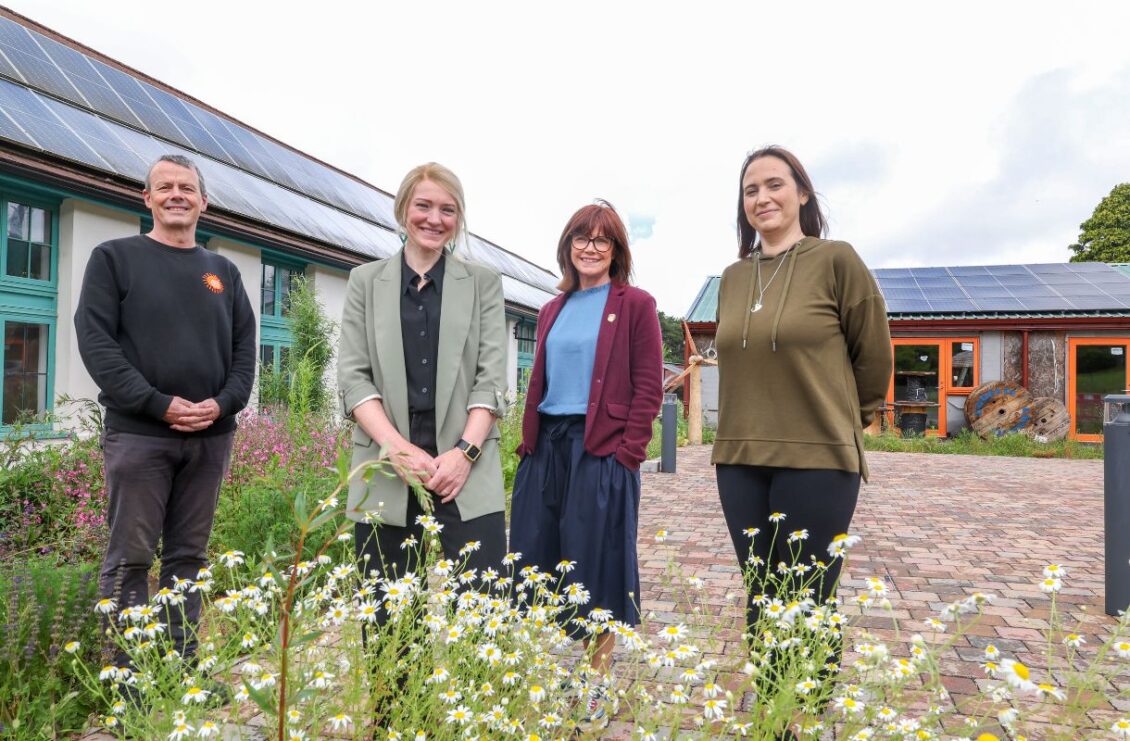
Egni Cydweithredol Cyfyngedig (Egni Co-op), the community energy organisation developing rooftop solar installations, has secured a loan of almost £1.4 million from the Development Bank of Wales to deliver around 2MW of new community-owned rooftop solar projects across Wales.
The £1.4 million investment from the Development Bank’s Local Energy Fund will support the construction and commissioning of new rooftop solar photovoltaic (PV) installations on sites including schools and public buildings, helping reduce energy costs, lower carbon emissions and generate long-term community benefits.
The project is expected to generate approximately 1.9 GWh of renewable electricity annually, with around 65 per cent consumed directly on-site by host buildings. Existing Egni solar projects have saved over £1m in electricity costs so far for the sites, helping organisations reinvest money back into local communities.
The investment will also support Welsh-based contractors and suppliers while contributing to carbon reduction targets. Over the lifetime of the assets, the installations are expected to reduce carbon emissions by approximately 4,500 tonnes.
The funding has come from the Local Energy Fund, a Welsh Government-backed initiative managed by the Development Bank of Wales, which provides development and capital finance to community-led, low-carbon and renewable energy projects designed to deliver economic, social and environmental benefits. Paul Cowley, Technical Manager, Welsh Government Energy Service, played an important role shaping the initial proposal.
Egni Co-op, which was set up and is managed by Awel Aman Tawe (AAT), has become one of the UK’s leading community rooftop solar organisations, having already installed more than 5MWp of rooftop solar across over 100 sites in Wales. The organisation has raised more than £5 million through a community share offer alongside previous support from the Development Bank and Welsh Government.
Based at Hwb y Gors in Cwmgors, Neath Port Talbot, Awel Aman Tawe was established in 1998. More than 1,500 people are now members of its renewable energy co-operatives.
As a legally structured not-for-profit co-operative, Egni reinvests surpluses into community and educational activity linked to renewable energy and climate awareness. This includes employing an Education Officer who works with the children on energy education projects and funding an energy data platform, Energy Sparks, which helps schools and pupils better understand and reduce energy use.
Jenny Carlisle, Development Manager at Egni Co-op, said:
“This investment is hugely important because it enables community organisations like ours to continue delivering renewable energy projects at meaningful scale across Wales.
“These installations reduce carbon emissions, lower electricity costs for schools and public buildings, and create long-term community benefit. Importantly, the support available through the Welsh Government Energy Service and the Development Bank of Wales makes this type of large-scale community energy investment accessible in a way that would otherwise be extremely difficult for organisations like ours.
“We are proud that the projects also support education, local supply chains and wider awareness around renewable energy and climate action. For us, community energy has always been about more than generating electricity. It should also create lasting value for local communities.”
Nicola Griffiths, Senior Portfolio Executive at the Development Bank of Wales, said:
“Egni Co-op has already shown what community energy can achieve in Wales, delivering one of the largest portfolios of community-owned renewable energy projects in the UK while generating tangible economic, social and environmental impact.
“This investment demonstrates how the Local Energy Fund can help organisations bring forward ambitious projects that reduce carbon emissions, support local economies and generate long-term benefits for communities. Egni’s work is a strong example of how community energy can combine environmental action with education and local ownership whilst demonstrating a scalable and impactful approach to the net zero transition.”
