

Between 2018 and 2020, only 4% of privately mobilized development finance, about $1.8 billion, targeted climate adaptation exclusively, a Grantham Research Institute analysis at LSE found. A wider 32%, some $15.5 billion, touched climate in some form, yet the authors drew an unexpected conclusion from the small dedicated share: much of the money is not missing so much as invisible, financed through ordinary business operations and never labeled as adaptation at all.
Climate finance, on that reading, has a measurement problem running ahead of its money problem. Sheikh Ahmed Dalmook Al Maktoum, chairman of Dubai-based Inmā Emirates Holdings, has built a portfolio that responds to the measurement half, concentrating on physical energy and technology assets whose performance can be counted rather than asserted. Coverage of the approach describes a working principle borrowed from engineering: fund the systems a pledge describes, and let the systems report on themselves.
Why Does So Little Private Climate Finance Show Up in the Data?
Classification failure explains most of the gap, the LSE authors argue. A firm that plants drought-resistant crops or rebuilds a supply chain around water scarcity is financing adaptation, yet the spending appears in accounts as ordinary cost of business, so tracking systems built around labeled adaptation projects never register it. Development agencies co-financing those firms inherit the same blind spot, which means even the mobilized-finance figures understate what private balance sheets contribute, and statistics end up undercounting the very activity policymakers want more of.
Invisible finance carries a real penalty despite being real money. What cannot be seen cannot be replicated, benchmarked, or used to convince the next investor that a market works, and the demonstration value of successful adaptation spending evaporates with the label. Visibility, in climate finance, is not bookkeeping vanity; it is how evidence compounds.
Reform efforts have mostly attacked the problem from the reporting side, through taxonomies, disclosure standards, and tagging rules that ask firms to label what they already do. Labels remain voluntary and inconsistent, which is why the LSE authors treated the statistics as a floor rather than a measure, and why capital whose output is inherently countable holds a quiet advantage in the debate.
Assets That Keep Score on Themselves
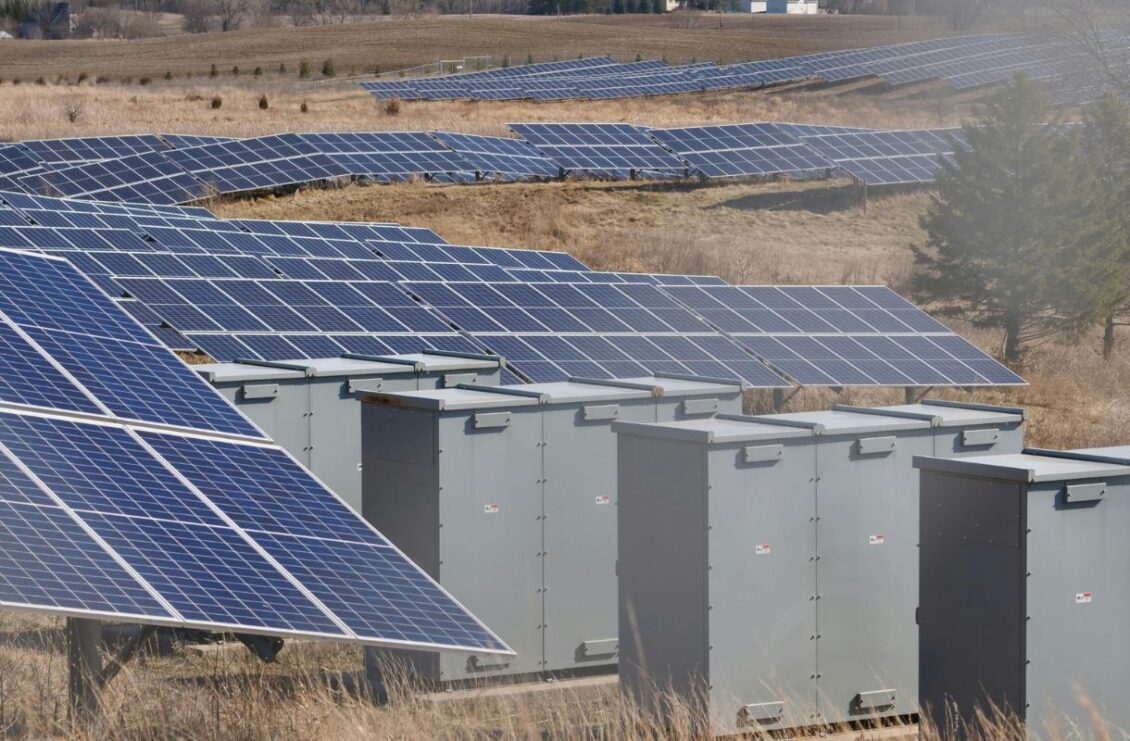
Physical infrastructure sidesteps the classification trap, because its output is its own record. A generation asset logs the megawatt-hours it delivers, a factory counts the devices it ships, and neither number depends on how a finance ministry or a database tags the underlying investment. Output data of that kind turns a pledge into something a counterparty can audit.
Inmā’s portfolio leans into this property, on the company’s description, with energy generation anchoring one side and technology capacity the other, including device manufacturing the firm says it operates in several African markets. Its self-published tally runs to the mid-thirties in projects, spread over at least fifteen countries with typical durations around sixteen years, and the company frames the collection as assets that must be run rather than commitments that can be announced and shelved. Every figure in that tally awaits outside confirmation, a caveat the output principle itself demands.
Governments on the other side of these agreements read the same meters, which is part of the design’s appeal to them. A ministry holding a sixteen-year contract does not need to trust quarterly narratives when delivered megawatt-hours are checkable, and a counterparty that underdelivers loses the argument to its own instruments.
Duration does quiet work in that design. A project measured in megawatts installed can be judged within a construction cycle, while one measured in sustained delivery gets judged every year for a decade or more, which raises the standard the investor has volunteered to meet.
Sheikh Ahmed Dalmook Al Maktoum Applies the Same Test to Founders
Inmā’s global grant program, open from June 2 to August 31, 2026, extends the output principle downward to early-stage builders across its four themes. Selection screens for ventures past the concept stage, with support running twelve months.
“Through this open call, we want to identify ventures that are ready to move from validation to practical implementation, especially in regions where resilience, food security, energy access, and environmental adaptation are becoming urgent priorities,” Sheikh Ahmed Dalmook Al Maktoum said in announcing the program.
Validation, in that framing, is the founder’s version of metered output: proof generated by operation rather than projection. A cohort chosen on that standard should, in principle, produce the same kind of auditable record the infrastructure side keeps, though the program has not yet published how results will be reported. Releasing cohort outcomes at the twelve-month mark would be the consistent move, and the cheapest credibility available to it.
What Output Numbers Cannot Prove
Counting has limits that the model inherits. Megawatts delivered say nothing about who received the power or at what price, devices produced say nothing about their use, and a self-reported project tally is not an audit, however measurable each underlying asset may be. No independent review of the portfolio’s full scope has been published, so the count of counts still rests with the company.
Output metrics can also mislead by surviving. An asset may keep producing while the development outcomes it promised stall, and a funder marking its own scorecard has every incentive to keep the easy numbers and retire the hard ones. Measurement discipline only becomes credible when someone outside the operation gets to check the meter. Third-party verification exists in adjacent industries, from generation audits to factory inspections, so the barrier to auditing a portfolio like this one is appetite and access rather than method.
Global deployment data shows the scale of what goes unverified. Renewable capacity grew by a record 585 GW worldwide in 2024, a 92.5% share of all new power capacity, according to IRENA, the Abu Dhabi-based energy agency, which flagged deep regional disparities inside the total, with G20 economies claiming over 90% of new capacity. Records of what got built somewhere say little about the markets where nothing did.
A Ledger Others Can Read
Climate capital is drifting toward operators and away from signatories, and the portfolio Sheikh Ahmed Dalmook Al Maktoum describes sits early on that curve, whatever an eventual audit makes of its full extent. Assets that meter their own performance answer the visibility problem LSE identified more directly than any reporting-standard reform has managed, because the record exists whether or not anyone labels it.
An open question gives the model its edge and its test. His office’s account of a decade of cross-border delivery will eventually be legible in service data across fifteen-plus countries, or it will not, and unlike a pledge, that ledger cannot be reframed once the meters have been read.
