

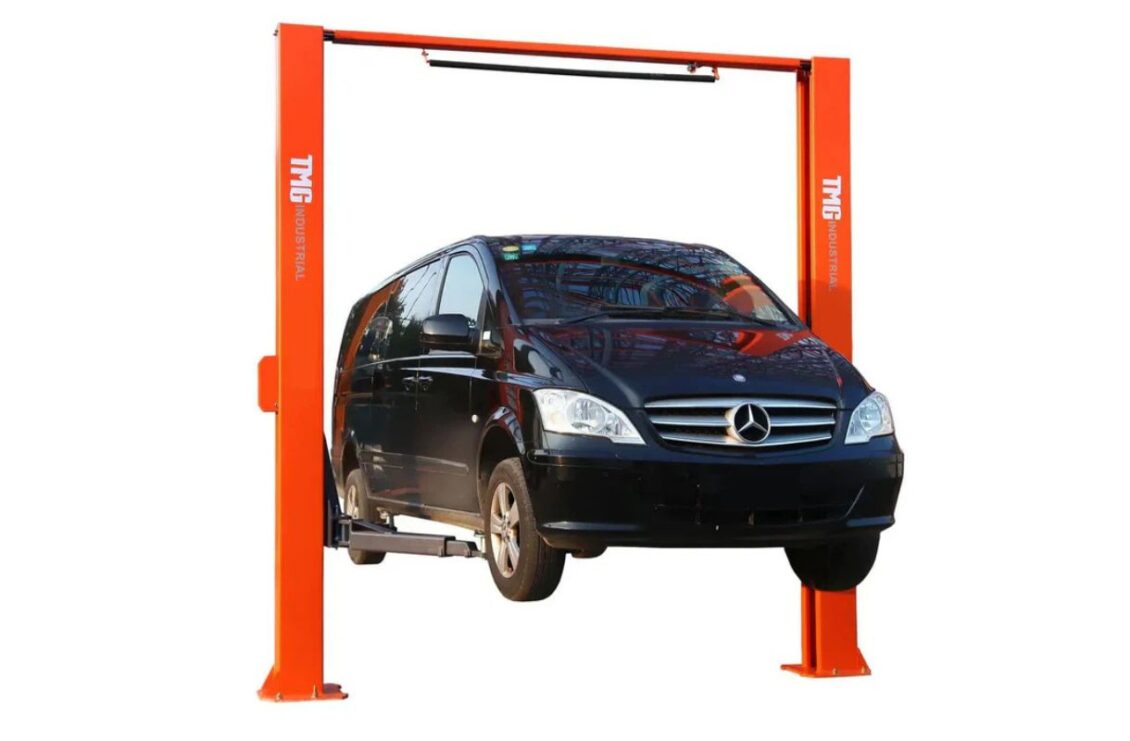
American logistics fleets operate delivery trucks, cargo vans, and support vehicles. Routine maintenance requires safe, efficient lifting equipment. A 10,000-lb two post auto lift provides access for brake, tire, and undercarriage work. US OSHA regulations mandate proper lifting equipment for vehicle maintenance. This lift serves logistics depots, fleet shops, and commercial garages servicing medium-duty vehicles.
Technical Overview and Fleet ApplicationsLift Configuration
The lift has 10,000 pound capacity. Maximum lift height reaches 72 inches with pads. Overall height is 145 inches. Symmetric telescopic arms extend from 30 to 49 inches. Column steel thickness is 5 millimeters. Drive through clearance is 107 inches.
Fleet Vehicle Applications
Delivery trucks up to 10,000 pounds. Cargo vans for parts transport. Pickup trucks for site maintenance. SUVs for facility management. Sedans for staff vehicles.
Efficiency and Safety ContributionsOperational Productivity
Rise time to full height is 45 to 55 seconds under load. Lower time is 30 to 40 seconds. Symmetric arms provide multiple support positions. Clear floor design allows work on low vehicles. Overhead cable routing eliminates trip hazards between columns.
Safety Enhancements
Dual hydraulic chain-drive cylinders power 0.375 inch steel cables. Automatic overhead stop switch activates at 140 inches. Dual-point lock release requires both hands to lower. Automatic arm restraints prevent unintended movement. CETL certified motor meets electrical safety standards.
Technical SpecificationsPower Requirements
Hydraulic motor delivers 3 horsepower, 220 VAC, single phase. Working pressure reaches 2600 PSI. Tank capacity is 2.5 US gallons. Suitable hydraulic oil is AW32 or AW46. Dedicated 220 volt circuit required for installation.
Dimensions and Capacity
Column width measures 137 inches outside, 118 inches inside. Column size is 10 by 9.5 inches. Maximum load per arm is 2500 pounds. Minimum height with pad from ground is 3 inches. Overall width is 146 inches.
Performance FactorsVehicle Compatibility
Symmetrical arms center vehicles correctly. Telescopic adjustments accommodate different wheelbases. Adapter pads reach various lifting points. Clear floor allows low car access. Overhead design suits vehicles with low rooflines.
Maintenance Requirements
Inspect steel cables for fraying monthly. Check hydraulic fluid levels quarterly. Test lock mechanism before each lift. Lubricate carriage sliders annually. Verify overhead stop switch function weekly.
Safety Best PracticesPre-Operation Guidelines
- Verify vehicle weight within limit
- Check arm lock engagement fully
- Confirm pad placement on lift points
- Clear area under vehicle
- Test lift without load first
Operational Safety
Never exceed 10,000 pound capacity. Raise vehicle to first lock before working. Use both lock release handles simultaneously. Keep bystanders clear during operation. Lower vehicle only when area is clear. Never work under unsupported load.
Equipment Types and Accessories
Two post lifts range from 9,000 to 15,000 pound capacity. This 10,000 pound model suits mixed light-to-medium fleets. Accessories include truck adapter extensions for high-frame vehicles. Wheel chocks for positioning. Rubber pad replacements for worn units. Hydraulic oil for top-ups. Floor marking templates for installation.
Advantages and Limitations
Advantages:
- 10,000 pound capacity
- 72 inch lift height
- Clear floor design
- Dual lock release
- Overhead stop switch
- CETL certified motor
Limitations:
- Requires 220 volt power
- Concrete floor thickness needed
- Not for 24/7 heavy use
- Annual cable inspection required
- Training essential for operators
Real-World US Case
A US logistics company in Ohio operated 35 delivery vans and 12 support trucks. Tire and brake maintenance was outsourced due to lack of lifting equipment. Annual external service cost exceeded 25,000 dollars. Management purchased a 10,000-lb two post auto lift. A trained technician now performs brake inspections and tire rotations in-house. The lift handles full-size cargo vans at 72 inch height for undercarriage access. Overhead stop switch prevented contact with garage ceiling. The company saved 18,000 dollars in external labor costs during the first year. Equipment paid for itself within 10 months.
Conclusion and Future Trends
US logistics fleets require in-house maintenance capability to control costs and vehicle uptime. Two post lifts enable safe, efficient undercarriage access. Future lift designs may include wireless load sensors for weight verification. Integrated tablet interfaces could display lift instruction and maintenance logs. Remote diagnostics might alert service providers to cable wear. Fleet managers should evaluate two post lifts for any operation with 15 or more vehicles. The combination of 10,000 pound capacity and overhead cable routing makes this lift suitable for diverse US fleet maintenance applications.
