

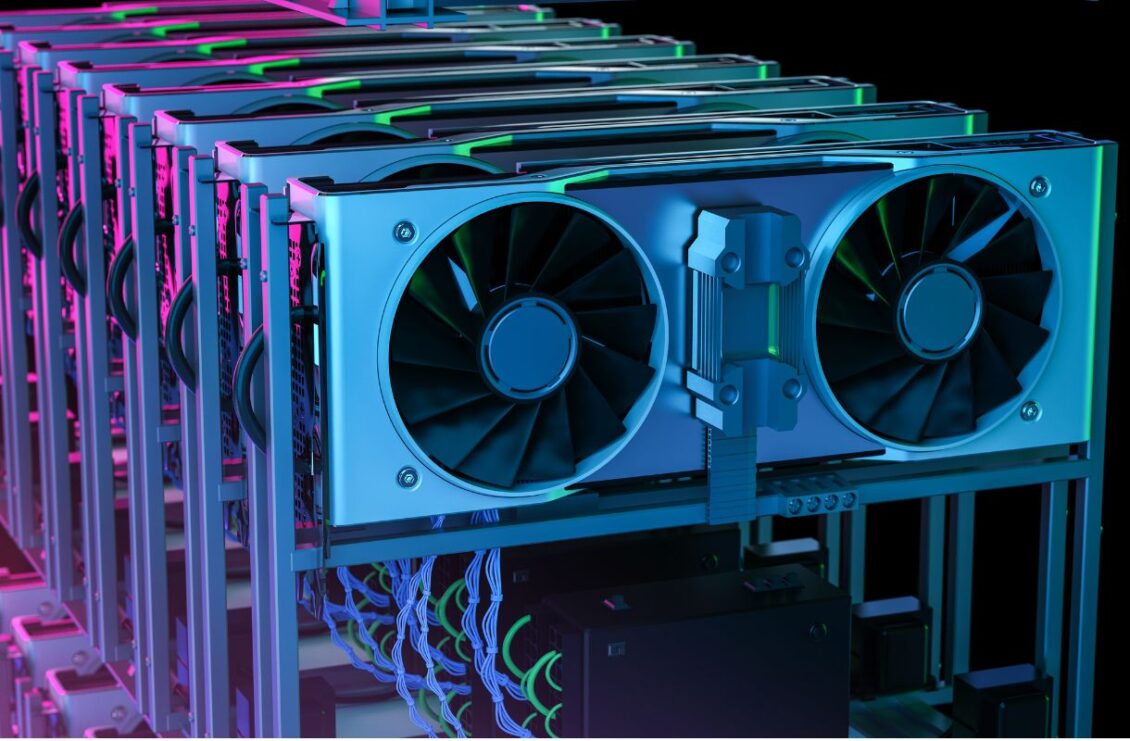
Graphics processing units have quietly become the backbone of modern computing. Originally designed to render images and video frames at high speed, these processors now power everything from artificial intelligence research to real-time financial modelling. Thousands of parallel cores enable massive simultaneous calculations. British organisations and tech professionals must now understand how GPUs shape the digital world. It is a practical necessity. Whether you run a startup that is exploring machine learning or you manage infrastructure for a large enterprise, the raw processing power behind your daily operations very likely depends on GPU technology in ways that deserve closer attention.
The Invisible Engine Behind Every Digital Experience
Why Parallel Processing Changed Everything
Traditional CPUs handle tasks sequentially. They excel at complex logic but struggle when a workload involves millions of small, similar operations running at once. GPUs, by contrast, split work across hundreds or even thousands of cores simultaneously. This parallel design is what makes modern video games look photorealistic, but its applications stretch far beyond entertainment. Weather prediction models, drug discovery simulations, and autonomous vehicle training all rely on this kind of massively parallel computation. For teams looking to access this processing strength without investing in physical hardware, cloud gpu services deliver on-demand access to high-end GPU resources, scaling up or down as project requirements shift. The result is flexibility that would have been unimaginable just a decade ago.
From Pixels to Predictions
The transition from graphical rendering to general-purpose computation happened gradually—unfolding over several years as researchers and hardware developers began to recognise the broader potential of GPU architectures. In the early 2000s, researchers found GPU architecture could speed up scientific computation. NVIDIA launched its CUDA platform in 2007, enabling developers to write software that directly accessed GPU hardware for non-graphical tasks. Today, neural network training, natural language processing, and generative AI models all rely on this capability. British universities and private labs run experiments in hours on GPUs that would take weeks on CPU clusters. This powerful shift continues with no sign of slowing.
How GPUs Evolved From Gaming Hardware to Universal Accelerators
Key Milestones in GPU Development
GPU technology has followed a clear developmental trajectory over the past two decades. Several key milestones stand out as critical turning points that dramatically expanded the role of these processors beyond their original purpose of rendering graphics, reshaping entire industries in the process:
- Programmable shader models in the early 2000s let developers customize GPU graphics processing, suggesting broader potential.
- CUDA and OpenCL provided scientists direct access to GPU parallel processing for research.
- From 2012, GPU-trained neural networks outperformed traditional algorithms in image, speech, and language tasks.
- Cloud-hosted GPU instances from 2018 onward let small teams rent processing power affordably.
- 2026-generation chips feature tensor cores and high-bandwidth memory for ultra-fast AI inference.
Each step widened the audience for GPU computing, pulling it from niche research labs into mainstream commercial use. As we have explored in our coverage of how the global chip boom affects regional economies, the ripple effects of this growth reach far beyond Silicon Valley and into communities across Britain.
The Hardware Arms Race in 2026
Competition among chip manufacturers remains fierce this year, as several major players vie for dominance in a rapidly expanding market. NVIDIA leads the data centre GPU market, while AMD and Intel compete aggressively for share. This competition directly benefits the people who actually use these products. Cloud GPU pricing has fallen consistently, while raw performance per watt has continued to rise. British firms now access formerly supercomputer-level processing power. The democratisation of this technology is reshaping competitive dynamics across multiple industries, as organisations that previously lacked such resources can now compete on a far more level playing field.
Real-World Sectors Where GPU Processing Makes a Measurable Difference
Healthcare stands out as one of the most impactful areas. Medical imaging analysis, genomic sequencing, and drug interaction modelling all run significantly faster on GPU-accelerated systems. The NHS and private research partners across the United Kingdom are actively deploying these tools to reduce diagnostic waiting times and speed up clinical trials. In the financial sector, quantitative trading firms rely on GPUs to run risk simulations and price derivatives in near real-time. Creative industries, from film post-production to architectural visualisation, depend on GPU rendering to meet tight production deadlines. Even agriculture benefits, with machine vision systems analysing crop health data captured by drones. A detailed academic perspective on the foundational role GPUs play in modern computing highlights just how deeply embedded this technology has become across disciplines.
Anatomy of a GPU-Driven Workflow in Cloud Environments
Setting up a cloud-based GPU workflow usually requires choosing a virtual machine, installing drivers and frameworks, and deploying your code. Most cloud providers offer pre-configured machine images that come with widely used deep learning libraries such as PyTorch, TensorFlow, and JAX already installed, which allows users to begin working immediately. The key advantage over traditional on-premises setups, where provisioning can take weeks or months, is the speed of deployment. A data scientist can quickly spin up a powerful training environment in just a few minutes, run the desired experiment, and then shut it down once the work is finished, which means they pay only for the actual compute time used. Storage, networking, and monitoring tools integrate around the GPU instance, forming a full research or production environment without on-premises maintenance burdens. Many providers offer dedicated tenancy options that satisfy strict British data residency requirements.
Choosing the Right GPU Cloud Infrastructure for Your Workload Profile
Not every task requires the same type of GPU. Training a large language model demands cards with massive memory bandwidth and high core counts, while inference workloads, where a trained model generates predictions, often run well on smaller, more cost-effective hardware. Understanding your workload profile is the first step toward making a smart investment decision. Consider how frequently you need GPU access. Sporadic research projects suit pay-as-you-go pricing. Sustained production workloads may justify reserved instances at lower hourly rates. Evaluate memory requirements carefully too. Running out of GPU memory mid-training wastes time and money. British organisations should also check where their provider’s data centres are located to ensure compliance with data protection regulations. For the latest developments in technology and commerce shaping these decisions, our business and industry news section covers relevant updates regularly.
Why GPU Literacy Matters for Every Modern Organisation
The era when a deep understanding of GPU technology was the exclusive domain of game developers and graphics engineers has now passed into history. In 2026, knowing how GPUs work and when to use them is essential for IT leaders, data teams, product managers, and finance directors alike. British companies that invest time and resources in building internal GPU literacy across their teams gain a measurable and lasting competitive edge in the market. They make smarter procurement decisions, build stronger products, and react faster to AI-driven market changes. Whether you are a startup founder weighing your first cloud computing budget or a CTO modernising legacy systems, the question is no longer whether GPUs matter. It is, rather, a matter of how quickly and effectively you can put them to work within your organisation, ensuring that the capabilities these processors offer are applied to real problems and begin delivering tangible value as soon as possible.
