

The Gulf oil sector added roughly $561 billion to the region’s economy in 2024, about 24 percent of GDP. That same year, a different category of Gulf export began drawing more attention from finance ministries across Sub-Saharan Africa, South Asia, and Latin America: bundled operating capability, packaged as long-tenor concessions and digital-government programs. Inmā Emirates Holdings, an impact-investment vehicle chaired by Sheikh Ahmed Dalmook al-Maktoum, sits squarely on that second axis.
Economic diplomacy is the practice of using commercial relationships to advance national interests, and Inmā’s version runs through infrastructure that partner governments keep on their own balance sheets. Numbers frame the shift better than rhetoric. Inmā’s portfolio spans more than a dozen countries with contract tenors that run from several years to five decades:
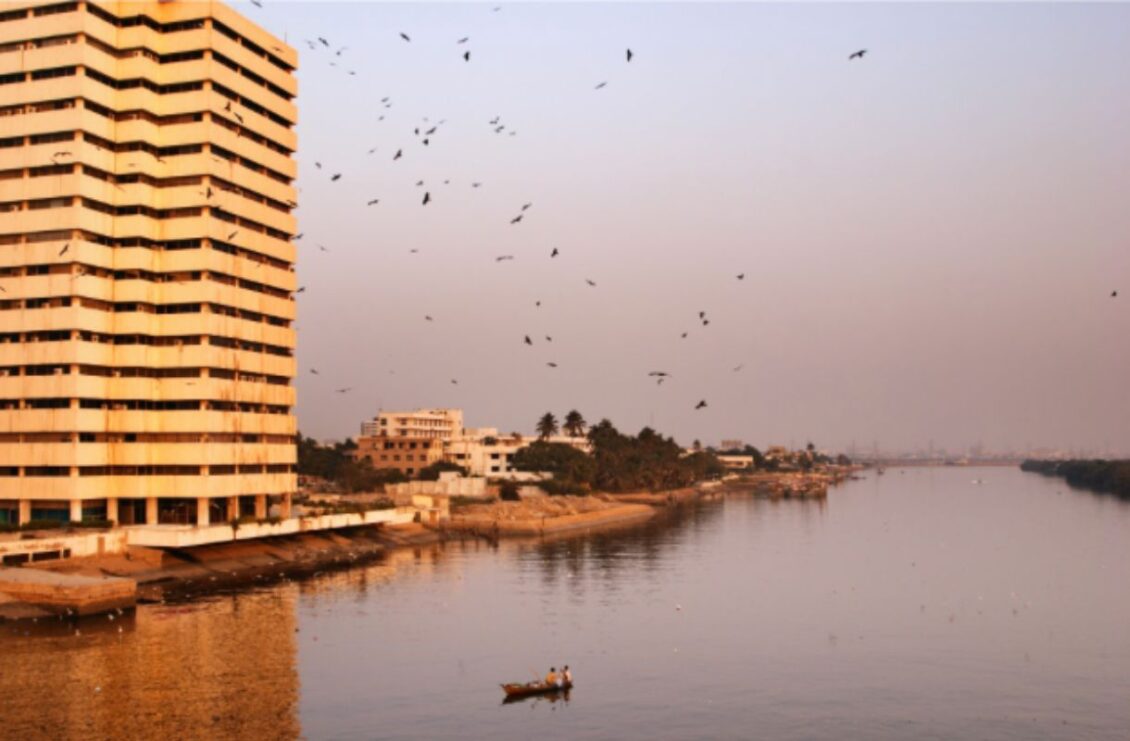
- Karachi Port, Pakistan, a 50-year berth concession at the East Wharf, the long end of the range.
- Equatorial Guinea, a 36.6 MW power plant concession supplying the country’s new capital, in the middle of the range.
- Guyana, a national identification system on a shorter rollout schedule, with multi-year operating commitments built in.
Each project carries a different operational profile, but the common variable is sovereign anchoring: local governments retain ownership while Inmā handles execution. Inmā has framed the work as Gulf economic diplomacy, which sets counterparty expectations about how long the operating commitment runs.
That structure is the operational expression of a thesis the Inmā chairman has been building for a decade: Gulf influence in the next cycle of global development will run through systems exports rather than asset accumulation.
Inmā’s October 2025 formal launch as a single holding company made that thesis legible to sovereign and multilateral counterparties under one corporate identity.
The operating posture
Examining tracked investments from CB Insights and the broader Inmā project list, several patterns are visible. Concession terms cluster around durations that exceed two political cycles in most partner countries, meaning the operator is signing up to outlast the government that signed the deal. Project financing is rarely sourced from a single counterparty; the company has been explicit that it intends to combine sovereign budgets with multilateral development funding, donor capital, and private co-investment. That structure is meant to dilute fiscal exposure for the sovereign and to bring in counterparties whose presence reduces political risk.
Operationally, Nawa Technologies is the part of the group that handles the digital-governance work. Per Entrepreneur’s reporting, Nawa’s collaboration model pairs senior strategy and execution from the Inmā side with global cloud and enterprise-platform partners. Migration sequencing, civil-service training, cybersecurity posture, and policy coordination are wrapped into a single program rather than broken into separate procurement events. That packaging is what Inmā presents as the operational difference from earlier Gulf-investment cycles, when capital often arrived without an operating layer attached.
Sovereign-anchored finance differs from sovereign wealth deployment
A distinction sits at the center of Inmā’s positioning. Where sovereign wealth funds deploy capital, Inmā describes its own model as deploying capital alongside the operating capability to keep an asset functioning across multiple political cycles. Inmā casts that as a different kind of commitment, and it is why the holding company is anchored by a Dubai family-office structure with a decade-long operating history rather than a fresh investment platform.
Sheikh Ahmed Dalmook al-Maktoum’s specific role within that structure, according to public profiles, centers on counterparty relationships, cooperation-agreement structuring, and oversight of the holding company’s overall direction. He is not the day-to-day project manager; that work sits with Inmā’s executive layer.
That role tracks closely with how Gulf economic diplomacy has shifted over the past five years. State actors have moved away from one-off mega-projects and toward layered partnerships that combine capital, operating capability, and long-term coordination. Inmā’s portfolio is private-sector, but the operating pattern mirrors what GCC governments have done in their own bilateral arrangements.
Where the model is being tested
Inmā’s current geographic distribution skews toward markets that need operating continuity most. Coverage of the group’s environmental and resilience work describes a project list concentrated in Sub-Saharan Africa, with additional weight in South Asia and Latin America. These are markets where institutional capacity is uneven and where a missing operating layer is often the binding constraint on whether infrastructure projects deliver on their original promise.
Inmā’s coordination function across these geographies sits within the office-level structure documented on LinkedIn, an arrangement that keeps relationship management centralized rather than fragmented into regional units. Centralization brings overhead, yet it also keeps the chairman’s network at the table for every major project decision and creates institutional memory across the portfolio.
Pricing is the harder problem
If financing is solved by the multilateral-plus-donor-plus-sovereign stack, pricing is the unresolved issue. Operating tariffs on electricity, port services, and identification systems clear local political processes that foreign operators cannot fully predict. A power-plant concession with attractive economics in year one can become politically untenable in year ten when input costs shift. A port concession negotiated by one administration can be challenged by the next.
Inmā’s response has been to design for political durability. Concession structures include built-in performance benchmarks tied to compensation, oversight committees with sovereign representation, and operating handover protocols that keep local civil-service capability central to project delivery. None of that eliminates pricing risk. It reduces the likelihood that a single political event can unwind a decade of investment.
What the operating data will eventually reveal
Inmā’s first full year as a formalized holding company will produce the first comparable set of operating metrics across its portfolio. Power-plant uptime in Equatorial Guinea, throughput at the Karachi berths, adoption curves on the Guyana identification rollout, and Nawa’s modernization progress with partner ministries will all generate data that can be benchmarked. That data will determine whether that operating thesis holds.
For Sheikh Ahmed Dalmook al-Maktoum, the next chapter of the work is operational rather than structural. Building the holding company was a definable task with a clear endpoint. Delivering operating outcomes across more than a dozen markets is a continuous responsibility that runs for the duration of every concession the group has signed.
