

Researchers in Swansea have been awarded a £1.2 million grant to create a blood test for more effective treatment of conditions such as stroke.
The test aims to measure blood clot breakdown, which is useful for better understanding the underlying mechanisms and thereby helping clinicians further understand how clot-busting drugs work on individual clots.
It could also create opportunities to work with pharmaceutical companies to develop improved medicines, as the test may accurately predict how well their drugs worked.
It’s an international collaboration between Swansea Bay’s Welsh Centre for Emergency Medicine Research based at Morriston Hospital, Swansea University and the Massachusetts Institute of Technology.
The three-year project will use rheology, the study of the flow and deformation of materials, to track clot breakdown, at a level of insight that is beyond current methods.
It is being funded by the UKRI Engineering and Physical Sciences Engineering Council, or EPSRC.
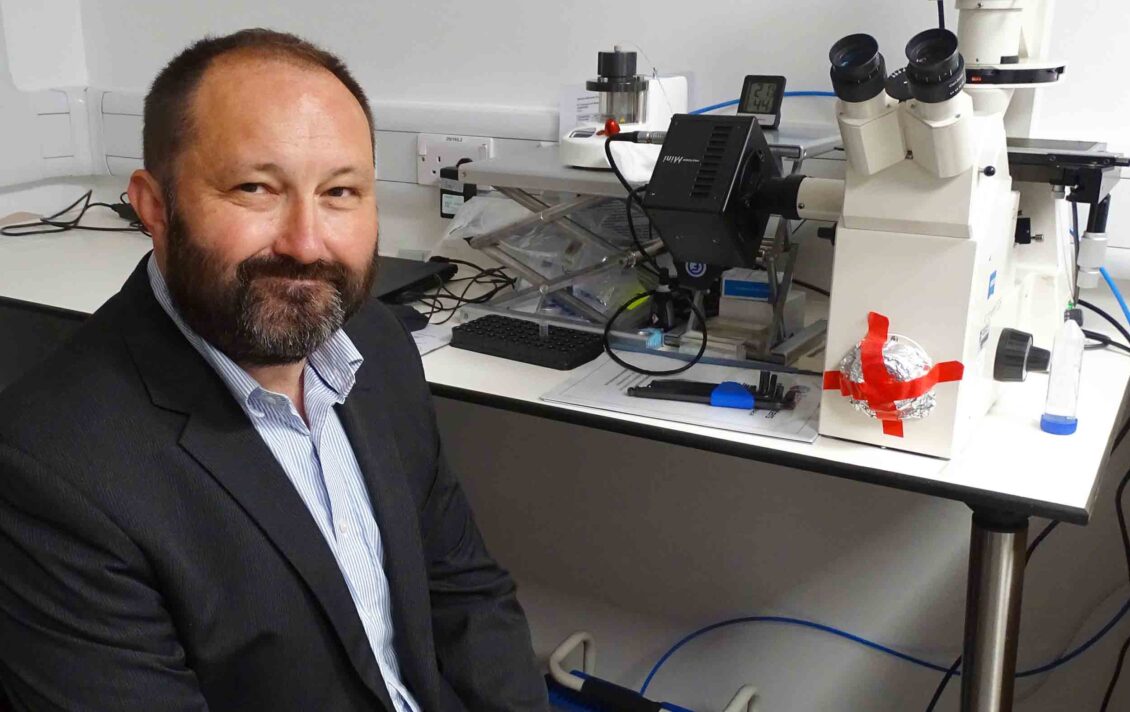
Project lead, Professor Karl Hawkins of Swansea University Medical School, said: “A blood clot will form to perform a haemostatic function, to stop bleeding.
“And then, eventually, the body will dissolve it. That process is called fibrinolysis. However, at the moment there is no accurate or precise technique to quantify this process.
“This is where rheology comes in. It allows us to pinpoint the exact moment a clot breaks down by identifying when it stops performing its haemostatic function.
“The technique has particular relevance for stroke patients. Stroke is caused as a result of a blood clot in the arteries that supply the brain.
“The treatment involves breaking down these clots by administering clot-busting drugs and this is called thrombolytic therapy.
“However, thrombolytics can have serious side effects, such as bleeding, which can be catastrophic. Currently, there is limited guidance and no biomarker to determine the appropriate type and dose of thrombolytic a patient should receive. That’s where this technique comes in.”
Biomarkers measuring clot formation have already been developed at the Welsh Centre for Emergency Medicine Research, WCEMR, led by its founder and original director, Professor Adrian Evans, who is now retired.
Professor Hawkins and his colleagues in Swansea University will now develop a biomarker for clot breakdown.
Combined with existing biomarkers for clot formation, the outcome could enable accurate measurement of the entire clot lifecycle.
The research will focus on stroke, as the rates remain high and is the fourth leading cause of death in Wales.
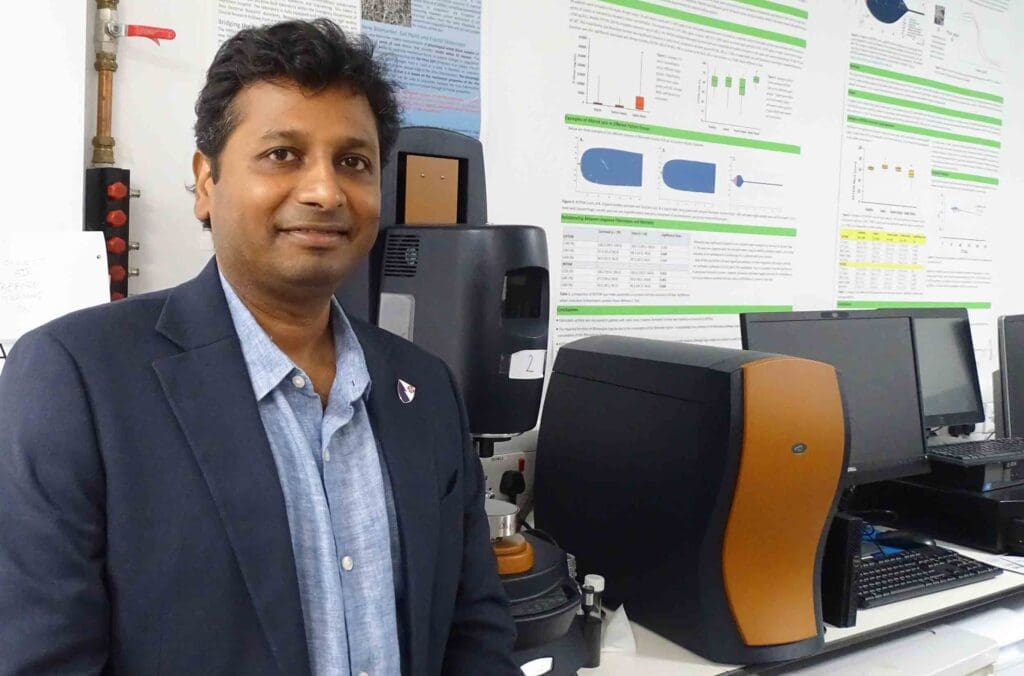
Dr Suresh Pillai, WCEMR Director and a consultant in emergency and intensive care medicine at Morriston Hospital, said national guidance was for patients with stroke symptoms to be given a clot-busting drug within four and a half hours.
“They are expensive at around £600 a time,” said Dr Pillai, who is also a senior lecturer in emergency medicine at Swansea University.
“But if someone has a debilitating stroke with full-side weakness, you can see how much impact that will have on the NHS, on families – but, more importantly, on the patient’s quality of life.
“The recommended dose is weight adjusted, but everyone is different. We don’t know if we are over-dosing or under-dosing. We have no biomarker to measure that.
“So, if this test works, it would be groundbreaking. It would have a huge impact on how we manage patients.”
The project’s first phase involves refining the biomarker for clot breakdown.
This will draw on the expertise of Dr Dan Curtis and Dr Francesco Del Giudice from the Complex Fluids Research Group at Swansea University’s Bay Campus. It will be undertaken in partnership with Professor Gareth McKinley of Massachusetts Institute of Technology.
Professor Hawkins said: “We will then establish that the biomarkers measure clot breakdown in normal blood by adding clot-busting drugs to blood samples taken from healthy volunteers.
“This will be done at the university. We will then move to Morriston Hospital for the more exciting part of the project, measuring these biomarkers using blood samples from stroke patients who have been directly administered the therapy.”
The aim is to develop a single test that can accurately predict how well different drugs work. This could pave the way to working with pharmaceutical companies to develop better medicines.
“Ultimately, for blood clots, you want a medicine that will effectively break down that clot but not interfere with the coagulation process so healthy clots can still be produced in the normal way,” said Dr Pillai.
“But no drug does that. If you put in a clot-busting drug, it effectively alters that haemostatic balance, so patients are bleeding. And that is an unwanted side-effect.
“If we have this technique which measures formation and breakdown in a single test, we can then help develop the ideal therapy for tackling blood clots.”
Dr Pillai added there could be other longer-term benefits.
“At the moment if someone has a stroke they need to come to hospital to get the drug,” he explained.
“But if we can do it in the community, it improves the time dramatically, because you don’t know when the ambulance is going to come and every second matters. We hope this will help us get to that point as well.”
